Dubai for First-Time Visitors: The Complete 2026 Guide
Everything you need to know before your first trip to Dubai — from visa requirements and best neighbourhoods to must-see attractions and insider tips from our travel experts.
Dubai is one of those cities that genuinely exceeds expectations. You arrive expecting glitter and superlatives — the tallest, the biggest, the most expensive — and you find all of that. But you also find a city with genuine warmth, extraordinary food, a fascinating history, and a pace of life that is surprisingly easy to fall into. If you're planning your first visit, this guide covers everything you need to know.
Do I Need a Visa for Dubai?
Visa requirements depend on your nationality. Citizens of the EU, UK, USA, Canada, Australia, and New Zealand receive a free visa on arrival valid for 30 days (extendable once). GCC nationals need no visa at all. Most other nationalities — including India, Pakistan, and many African and Asian countries — require a pre-arranged visa.
The good news: UAE tourist visas are straightforward to obtain. Conti7 Travel handles visa applications as part of all our Dubai packages, so you don't need to navigate the process alone.
Key visa facts:
- EU/UK/US/AU/NZ: Free visa on arrival, 30 days
- India, Pakistan, Philippines: Pre-arranged visa required (typically AED 250–350)
- Processing time: 3–5 working days
- Passport must be valid for at least 6 months
When Is the Best Time to Visit Dubai?
The short answer: November to March. Temperatures during these months range from 18°C to 28°C — perfect for outdoor sightseeing, beach days, and desert safaris. January and February are the peak months, with the Dubai Shopping Festival and Dubai Food Festival adding to the buzz.
Avoid June to September if you're not heat-tolerant. Temperatures regularly exceed 40°C with high humidity, making outdoor activities genuinely uncomfortable. That said, summer offers extraordinary hotel deals — five-star properties can be 50–70% cheaper than peak season rates.
April and October are excellent shoulder months: fewer crowds, lower prices, and still very pleasant weather.
Where to Stay in Dubai
Dubai's neighbourhoods each have a distinct character. Choosing the right base makes a big difference to your experience.
Downtown Dubai is the most central option — walking distance from the Burj Khalifa, Dubai Mall, and the Dubai Fountain. Ideal for first-timers who want to be in the thick of it. Hotels here range from mid-range to ultra-luxury.
Dubai Marina is the most vibrant neighbourhood for dining and nightlife, with a beautiful waterfront promenade and easy metro access. Great for couples and younger travellers.
Jumeirah Beach Residence (JBR) sits right on the beach and is perfect for families. The Walk at JBR is lined with restaurants and shops.
Palm Jumeirah is where you'll find the iconic Atlantis The Palm and some of Dubai's most exclusive beach resorts. More isolated, but spectacular.
Deira and Bur Dubai (Old Dubai) offer the most affordable accommodation and the most authentic experience — close to the Gold Souk, Spice Souk, and Dubai Creek.
The Top 5 Things to Do on Your First Visit
1. Burj Khalifa At the Top
No first visit to Dubai is complete without going up the world's tallest building. The 124th-floor observation deck offers 360° views across the city, the desert, and the Arabian Gulf. Book tickets online in advance — sunset slots sell out days ahead and cost less than walk-up prices.
2. Desert Safari
A late-afternoon desert safari is the single most popular activity for first-time visitors, and it earns that reputation. Dune bashing in a 4x4, camel riding, sandboarding, and a traditional Bedouin camp dinner under the stars — it's an experience unlike anything else. Conti7 Travel arranges both shared and private safaris with hotel pickup included.
3. Dubai Creek and Old Dubai
The historic heart of the city is a world away from the skyscrapers. Cross the Creek on a traditional Abra water taxi (AED 1), explore the Gold Souk and Spice Souk in Deira, and wander the beautifully preserved Al Fahidi Historical Neighbourhood in Bur Dubai. Allow a full morning or evening.
4. Dubai Mall and the Dubai Fountain
The world's largest mall is far more than shopping — it has an aquarium, an ice rink, a dinosaur skeleton, and KidZania. Outside, the Dubai Fountain puts on a free show every 30 minutes from 6 PM, shooting water 150 metres into the air. The 8 PM show, with the Burj Khalifa lit up behind it, is one of the great free spectacles in travel.
5. Palm Jumeirah
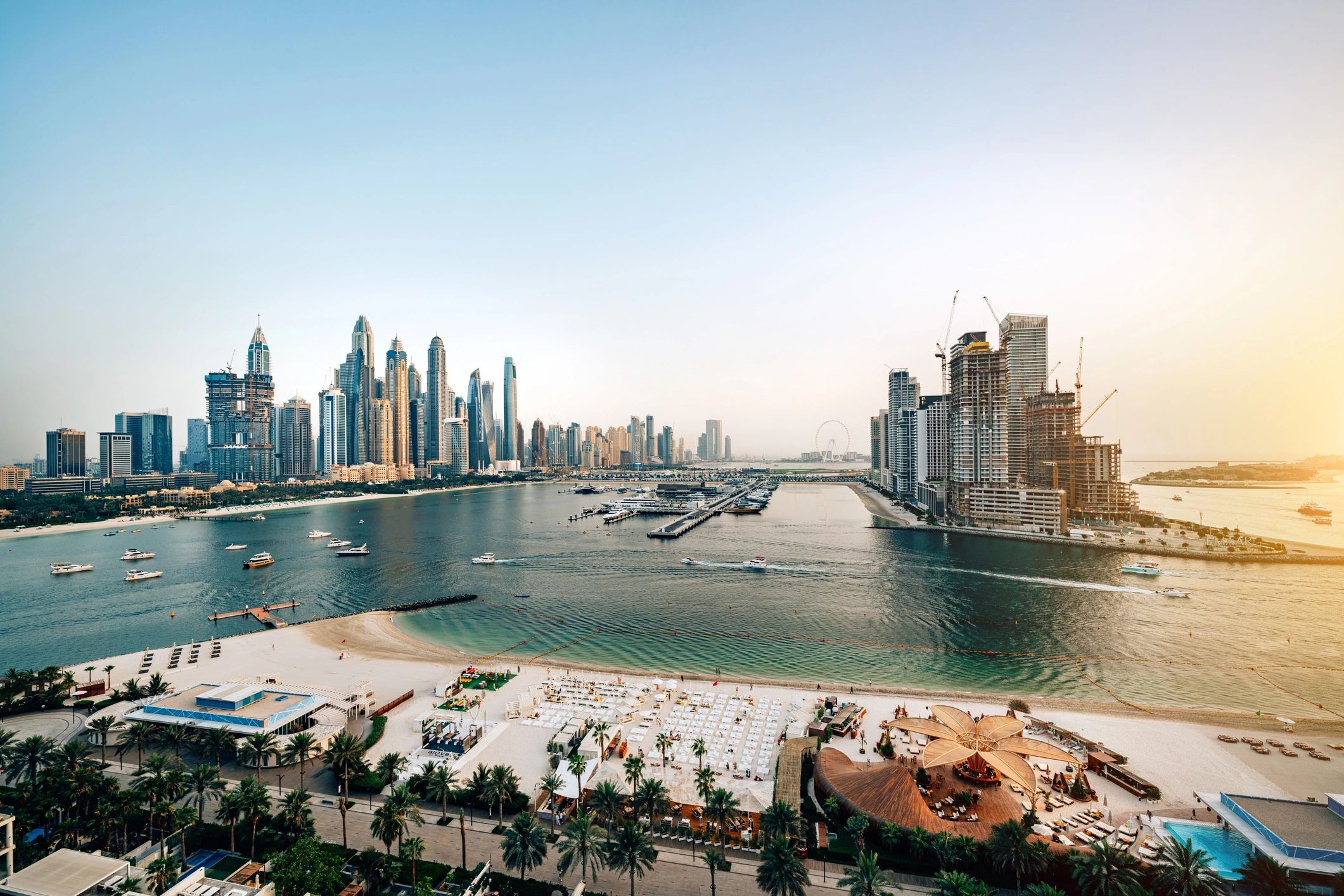
Take the Palm Monorail to Atlantis The Palm, walk the boardwalk at sunset, and visit one of the beach clubs for a day pass. The views back towards the Dubai Marina skyline are spectacular.
Money, Tipping, and Costs
The UAE Dirham (AED) is pegged to the US dollar at approximately 3.67 AED to 1 USD. Cards are accepted almost everywhere — hotels, restaurants, taxis, and most souks. Carry AED 100–200 in cash for Abra rides, small market stalls, and tips.
Tipping: Not mandatory but appreciated. 10–15% in restaurants (if service charge not included), AED 5–10 for taxi drivers, AED 20–50 for hotel porters and housekeeping.
Budget guide per person per day:
- Budget: AED 300–500 (hostel, street food, public transport)
- Mid-range: AED 700–1,200 (3-star hotel, casual dining, taxis)
- Luxury: AED 2,000+ (5-star hotel, fine dining, private tours)
Getting Around Dubai
The Dubai Metro is clean, air-conditioned, and excellent value. The Red Line connects the airport to Downtown, the Dubai Mall, and Dubai Marina. A Nol card (AED 25 deposit, reloadable) covers metro, bus, and tram.
Taxis are metered, affordable, and widely available. Uber and Careem operate throughout the city. For attractions not on the metro, taxis are the most convenient option.
Car rental is worth considering if you plan day trips to Abu Dhabi or want maximum flexibility. Roads are excellent and petrol is very cheap.
Cultural Etiquette
Dubai is one of the most cosmopolitan cities in the world, but it is still a Muslim-majority country with cultural norms worth respecting.
- Dress modestly in public spaces, souks, and religious sites. Swimwear is only appropriate at the beach or pool.
- Public displays of affection should be kept minimal.
- Alcohol is available in licensed venues (hotels, restaurants, bars) but not in public spaces.
- Ramadan: If you visit during Ramadan, eating, drinking, and smoking in public during daylight hours is not permitted. Many restaurants close during the day. The evenings, however, are magical — the city comes alive after Iftar.
- Photography: Always ask permission before photographing people, especially Emirati nationals.
How Conti7 Travel Can Help
Planning a first trip to Dubai involves a lot of moving parts — visa, flights, hotel, tours, transfers. Conti7 Travel handles all of it. We build bespoke Dubai itineraries for individuals, couples, families, and groups, and we're available 24/7 throughout your trip.
Get in touch with your travel dates and we'll have a personalised itinerary and quote back to you within 24 hours — at no charge for the consultation.
Tags & Topics
Written By
Conti7 Travel Team
Luxury travel and destination specialists crafting bespoke journeys across the globe.